The Heat Coefficient — Catch a Failing Breaker Connection While It's Still Only Warm
🤝 Want this built for you? Start a request — our AI scopes it, estimates a price range, and matches you with a vetted AI Advisor. →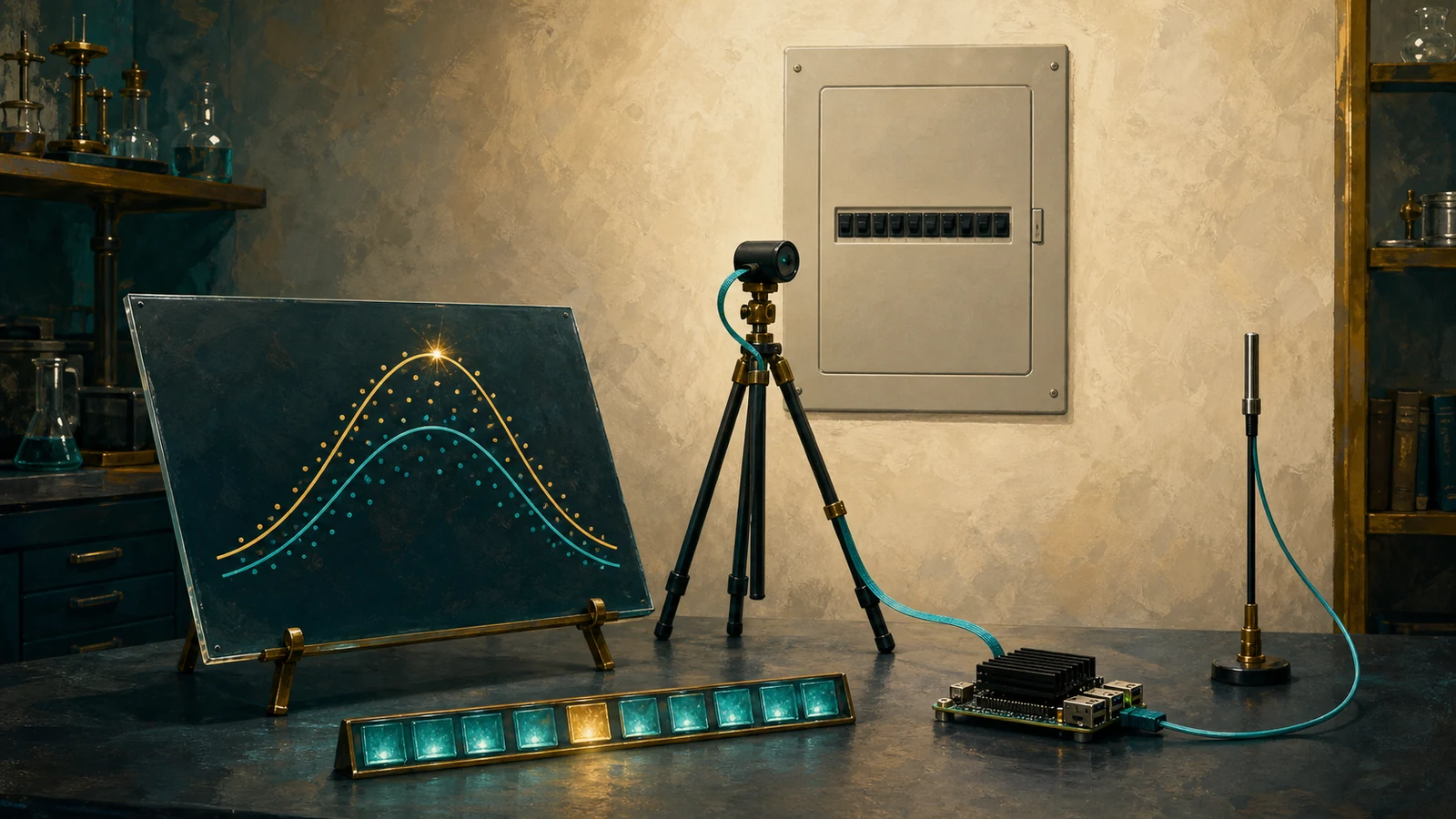
Two ways to open it
Unlocks this full walkthrough on your account — no subscription, and no account needed until you check out.
Over 160 project walkthroughs, the 6-week course, and your certificate.
🔒 Secure checkout by Stripe · Already a member? Sign in
What you'll do
A load-normalized thermal watch on your closed breaker panel that Claude Code built — an MLX90640 thermal sensor and an ambient probe on a fixed mount, feeding a Python pipeline that turns each zone of the panel into a heat coefficient (how much temperature rise a given load costs it), fits that coefficient nightly with a confidence interval and a fit-quality score, compares each zone against its own history and against its peer zones, and refuses to report anything at all when its geometry, emissivity reference, or load alignment cannot be verified — plus a one-page evidence packet a licensed electrician can act on.